


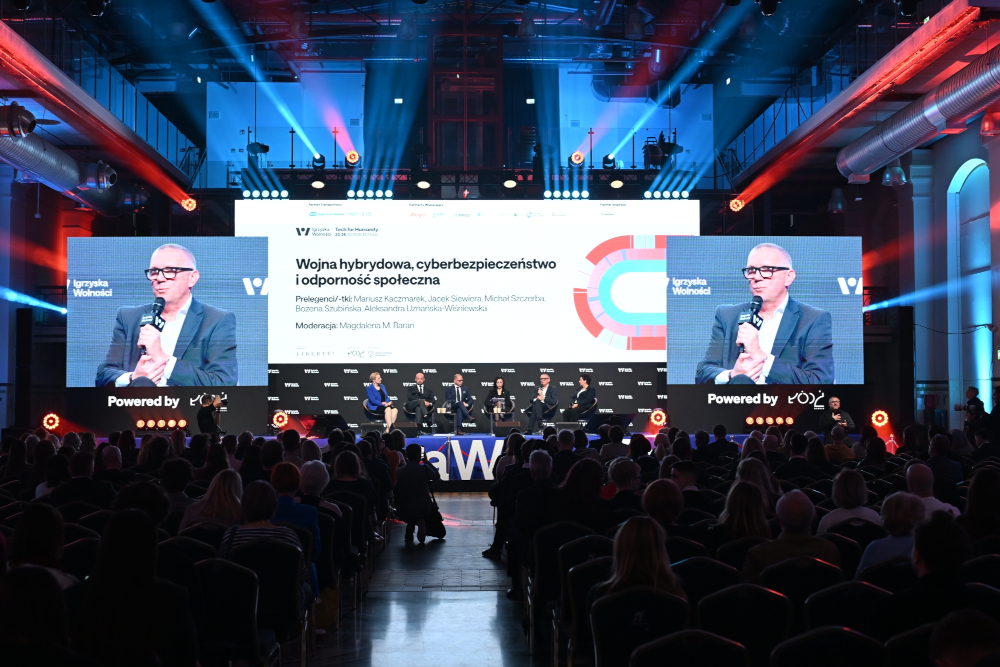
Europe must prepare for threats that target not only its territory, but also its digital systems, public services and citizens’ trust. That was a central message from a panel on hybrid warfare, cybersecurity and social resilience at the Freedom Games in Łódź.
The discussion highlighted how closely military and civilian security are connected. Cyberattacks can disrupt payments, telecommunications, energy supplies and access to water. Protecting these services, along with personal data and online transactions, is a responsibility shared by organizations across the economy–not just technology companies. Panelist Mariusz Kaczmarek of Totalizator Sportowy noted that Poland faces a particularly high level of exposure to cyberattacks.
But technology alone cannot protect a society. People are constantly exposed to information tailored to their interests and emotions, making critical thinking essential. Pausing to check whether a claim is credible–and whether it is designed to provoke a reaction–can help limit the spread of manipulation and disinformation.
Europe’s conventional defenses remain just as important. Jacek Siewiera of the Atlantic Council argued that progress has been made, but investment in the defense industry, military equipment and troop readiness must continue. Michał Szczerba, a Member of the European Parliament, called for close cooperation between the European Union and NATO, including fewer administrative and infrastructure barriers to moving forces across Europe in a crisis.
The panel also emphasized that defense depends on people, not only equipment. Bożena Szubińska of the Polish Armed Forces Veterans Association pointed to the growing contribution of women in military service, including in cyber units, and stressed that trained, supported personnel are vital to making modern capabilities effective.
Europe must also be prepared for the possibility of reduced support from the United States, said MP Aleksandra Uznańska-Wiśniewska. She warned that Russian cognitive warfare seeks to influence public opinion, weaken trust in institutions and undermine European unity. Exposing disinformation and explaining whose interests it serves are therefore part of defending Europe.
The panel’s message was clear: resilience requires a joined-up effort. Strong armed forces, secure digital infrastructure, cooperation among allies and citizens equipped to assess information all contribute to security. Europe’s ability to withstand hybrid threats will depend on how well it strengthens each of these areas together.