


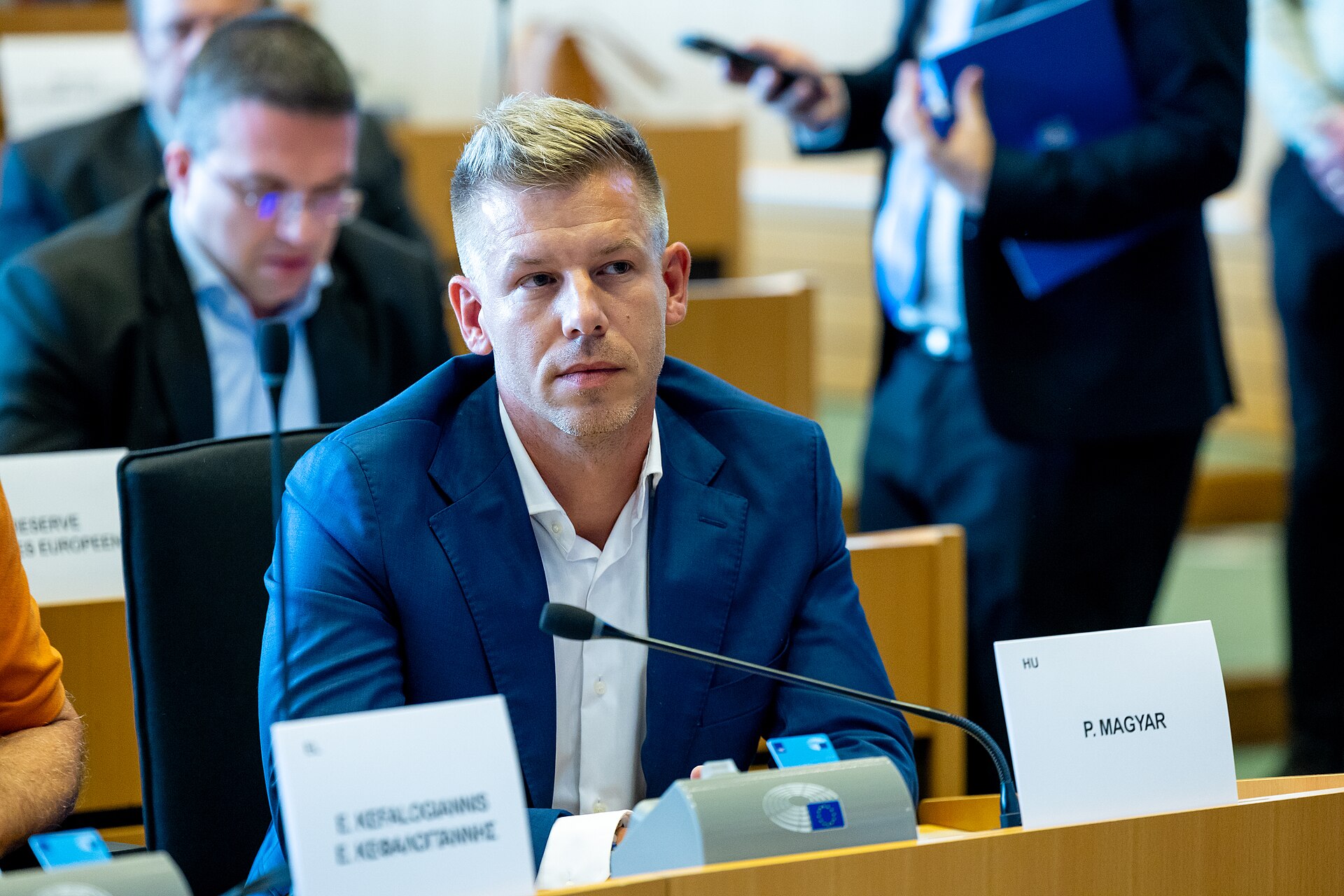
Peter Magyar — once a little-known lawyer and now the face of a sweeping political shift — has just toppled Viktor Orbán after 16 years in power. With a constitutional majority for TISZ-A, Magyar’s win signals an imminent dismantling of the Fidesz-built system and, in a few weeks will be appointmented as prime minister.
From European Parliament to Hungary’s front line
Although elected as an MEP in mid-2024, Magyar spent much of his recent time campaigning in Hungary rather than in Strasbourg. In the EP he served as vice-chair of the constitutional affairs committee, sat on the agriculture committee, and participated in two interparliamentary delegations — roles that gave him high-level contacts and a degree of protection even as he became the regime’s primary target.
Under surveillance and repeated attacks
Sources in the European Parliament say Magyar and his team operated under constant fear of surveillance by Hungarian services, including use of Pegasus. Budapest requested lifting his MEP immunity at least four times in under two years; three requests were rejected and one remains pending, with many colleagues viewing the attempts as politically motivated.
Most accusations stemmed from private complaints tied to Fidesz or the far-right Mi Hazánk; only one originated with a prosecutor. A widely reported June 21, 2024 nightclub incident led to an attempted theft charge that the EP blocked.
A campaign built on professionalism and local resonance
Observers praise TISZ-A as one of Europe’s most effective recent political projects — a rapid transformation from startup movement to a broad civic force. Magyar assembled a diverse team from culture and global business, ran meticulous, detail-focused campaigns (from lighting and music to door-to-door outreach), and used Hungarian national symbolism rather than EU imagery to avoid feeding Orbán’s “Brussels control” narrative. The movement also cultivated whistleblower networks within state offices to expose abuses.
Real fear, bold resolve
Colleagues recall Magyar’s caution: he rarely used his phone and warned associates about being targeted. When asked in Strasbourg if he expected to win, he reportedly replied, “If they don’t kill me, yes” — a grim but earnest reflection of the risks he faced.
Potential impact on populist movements across Europe
Magyar’s victory could serve as a blueprint showing that well-organized, professional civic movements can defeat entrenched populist incumbents, encouraging similar campaigns elsewhere. Opponents of populists may adopt Magyar’s tactics–local door-to-door outreach, cultural messaging, disciplined branding, and limited overt reliance on EU institutions–to neutralize nationalist narratives about outside interference.
If TISZ-A dismantles Fidesz-era institutions and restores checks and rule-of-law safeguards, it could reduce the appeal of governance-through-capture models by exposing their long-term institutional costs. A successful, domestically legitimate reset in Hungary could make EU-level pressure and conditionality more politically palatable elsewhere, changing incentives for populist actors who benefit from weak oversight.
What comes next
With a clear mandate and careful political strategy, Magyar and TISZ-A now face the difficult work of dismantling entrenched structures, restoring institutions, and governing a country long shaped by Orbán’s rule.
Whether their approach produces sustained democratic renewal will influence not only Hungary but the strategies and fortunes of populist movements across Europe.